LimX Dynamics has introduced LimX VGM (VideoGenMotion), its first embodied manipulation framework. LimX VGM leverages existing video generation models to translate human manipulation videos into robotic manipulation actions in real world. This marks a significant innovation in embodied intelligence, demonstrating efficient robotic manipulation with zero real robot data and cross-embodiment generalization.
LimX VGM: LimX Dynamics Demonstrates Embodied Manipulation by Using Human Videos
LimX VGM transforms the way robots learn and execute tasks by utilizing human manipulation video datasets. After post training of the video generation models with human manipulation videos, the framework creates a cohesive workflow. Simply prompted by scene image and task instruction, the workflow autonomously proceeds task understanding, object manipulation trajectory generation, and robot execution. This approach eliminates the need for costly real robot data and time-consuming data collecting, while is applicable onto different robot platforms, making it a highly efficient solution for robot manipulation.
Overcoming Challenges of Data Efficiency in Embodied Intelligence
The goal of embodied intelligence is to replace humans by robots to adapt to and interact with the physical world. A major hurdle in achieving this vision is the requirement for vast and diverse training data, including real world data, simulation data, and internet data. While real robot and simulation data are expensive and labor-intensive to acquire, videos of human manipulation, either from internet or generated by video generation models are widely accessible, carrying information of physics principles, behavioral patterns and manipulation decision-making processes.
However, translating these videos into robotic manipulation actions has been an enormous challenge. Current video generation models are still evolving and may produce unreliable outputs, like inaccuracies, deviations from real-world physics, or even hallucinations. The generated videos are lack of 3D information. LimX VGM addresses these issues by learning the tasks and extracting essential motion information from the human videos, effectively bridging the gap between human and robot manipulations. Furthermore, LimX Dynamics introduces an original concept “Data-to-Performance ROI”, to evaluate data efficiency, setting a new standard in the field.
The LimX VGM workflow consists of three key steps:
1. Training: Collecting videos of real human manipulations for the post training of existing video generation models.
2. Inference: Using the trained models to generate human manipulation videos with depth information based on prompts of initial scene images and task instructions. The videos are then translated into robotic manipulation actions.
3. Execution: Computing the manipulation behaviors and applying the results onto the robot to execute the trajectories in the physical world.
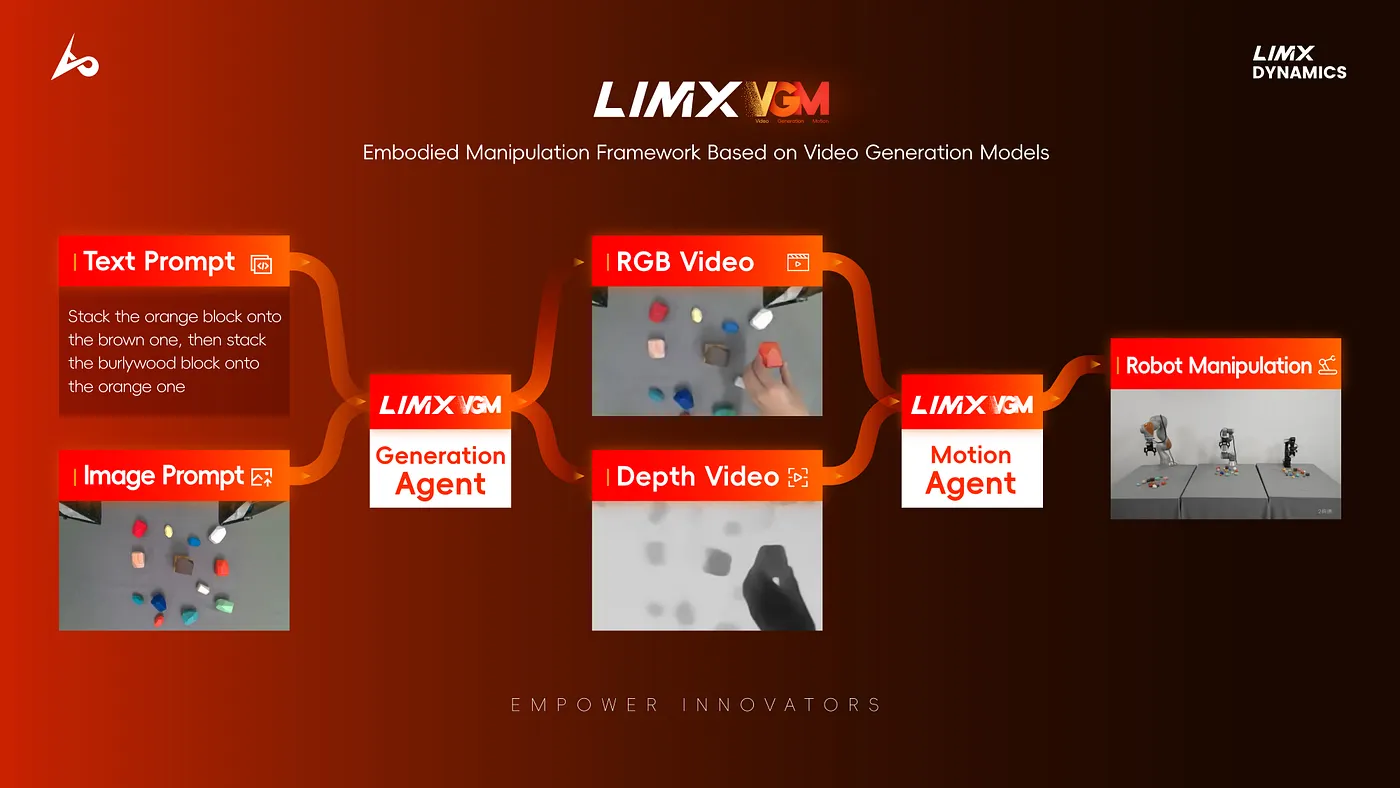
Workflow of LimX VGM
This streamlined process is driven by three core innovations from LimX Dynamics:
- Bridging Human Manipulation Videos to Robot Manipulation Strategies
- Introducing Spatial Intelligence
- Decoupling Algorithms from Robot Hardware
Bridging Human Manipulation Videos to Robot Manipulation Strategies: Video generation models are essentially a compression of historical data, including videos, images, texts, and synthetic data. They have already contained a vast amount of human manipulation information. Instead of developing our own video generation model, LimX VGM leverages existing models to extract key information from human videos and transform it into robotic manipulation strategies.
LimX VGM only needs to acquire human manipulation videos with ZERO real robot data. This makes data collecting simpler, at lower cost, and with higher efficiency. What’s more, with the large model continues to evolve, LimX VGM will possess even richer and more comprehensive manipulation knowledge.
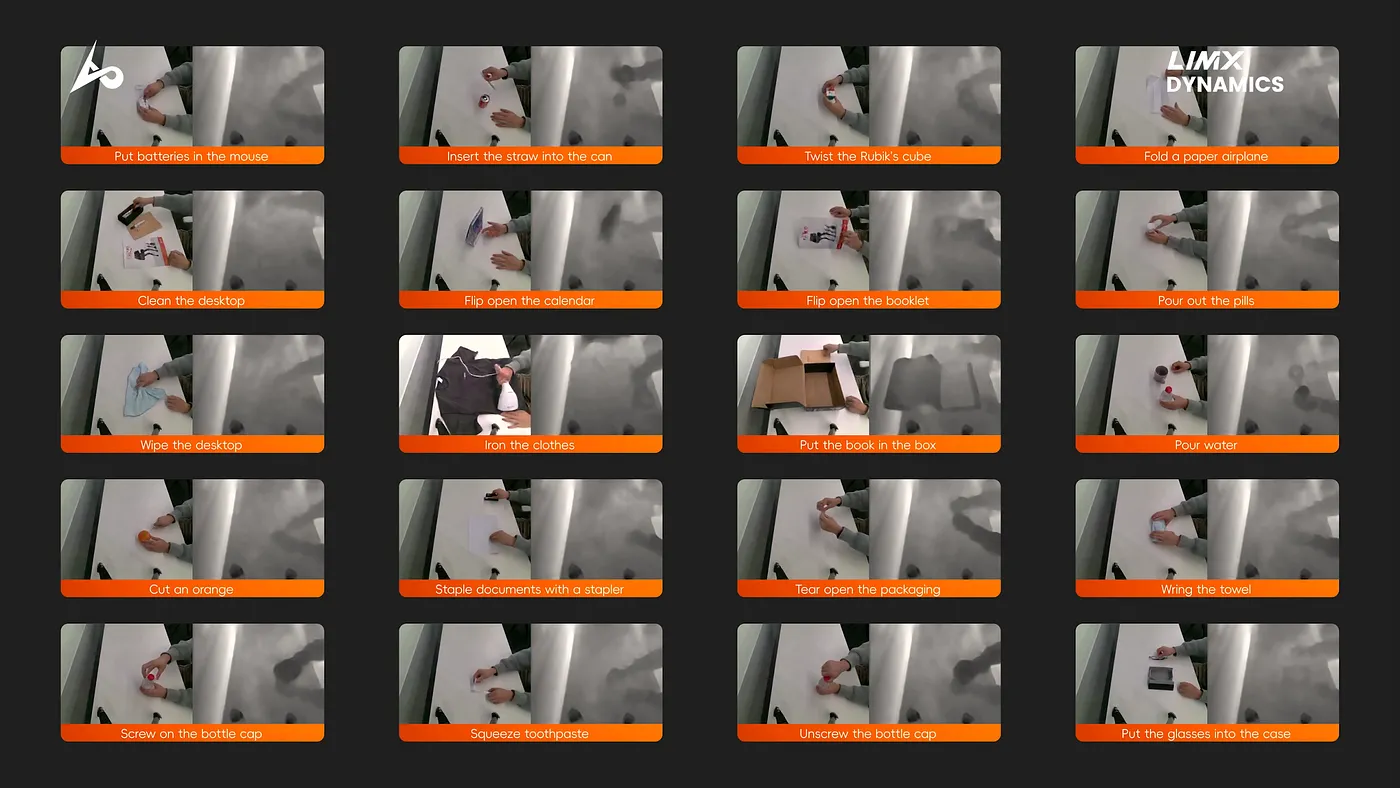
LimX VGM Only Needs to Acquire Human Manipulation Videos With ZERO Real Robot Data
Introducing Spatial Intelligence: By integrating depth information during post training, LimX VGM generates videos with 3D spatial data, enabling robots to perform manipulations in the physical world with greater accuracy. LimX VGM captures depth information in an easy, accessible, and efficient way, requiring only a depth camera to capture the real human hand’s manipulation process.
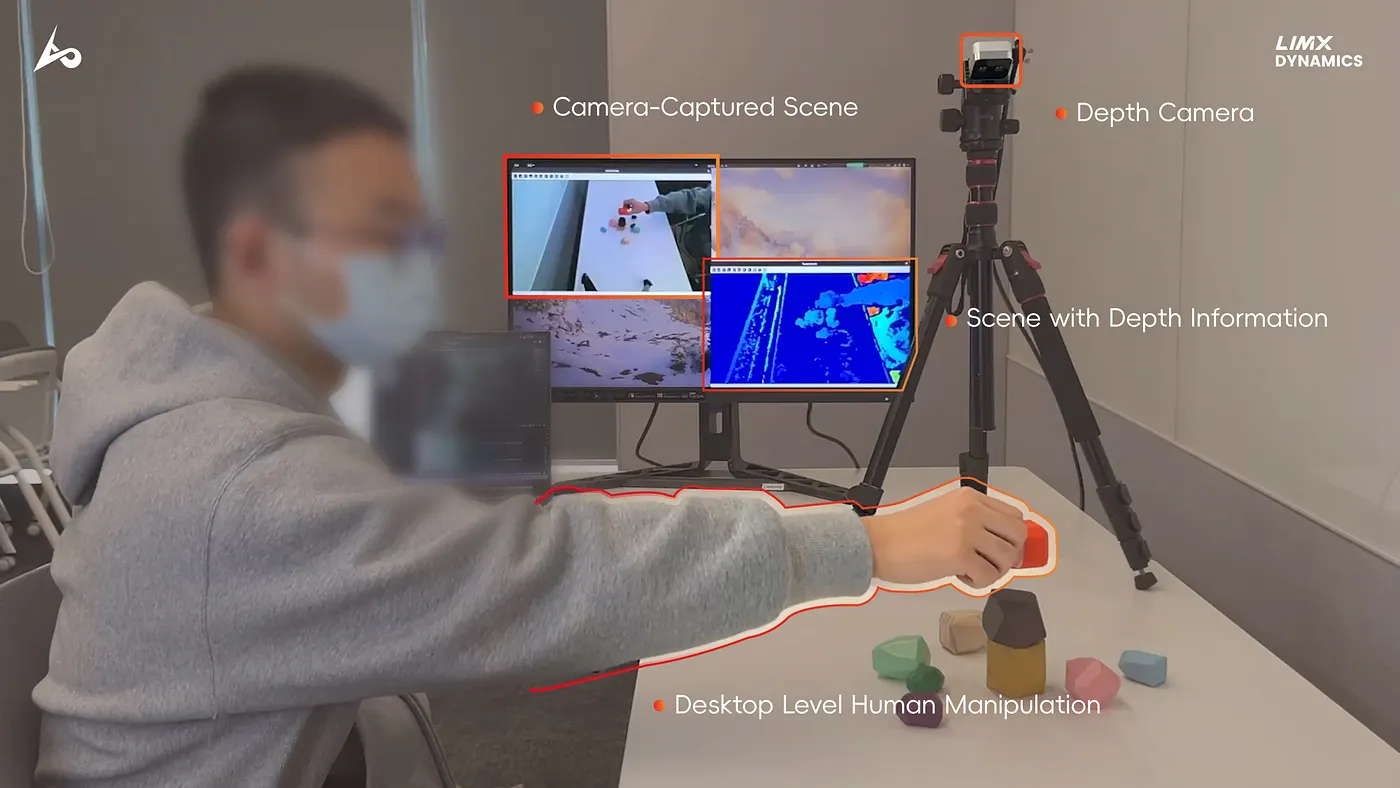
LimX VGM Collecting Videos of Real Human Manipulations
Decoupling Algorithms from Robot Hardware: The entire post training process of LimX VGM relies solely on human manipulation videos, without involving any robotic hardware or its manipulation data. This approach decouples algorithms from specific robot hardware, allowing for easy deployment across different platforms with minor debugging and adjustment.
The demo of LimX VGM uses three different robot arms, IIing the KUKA Iiwa 7 R800, UR3, and Airbot Play, each characterized with distinct configurations and capabilities. In the demo, LimX VGM achieves highly similar manipulation performances, showcasing its impressive cross-embodiment and adaptability. Even as robot hardware continues to evolve, no major adjustment in the algorithm or re-collecting data is needed, enabling the generalization of manipulation across various platforms.
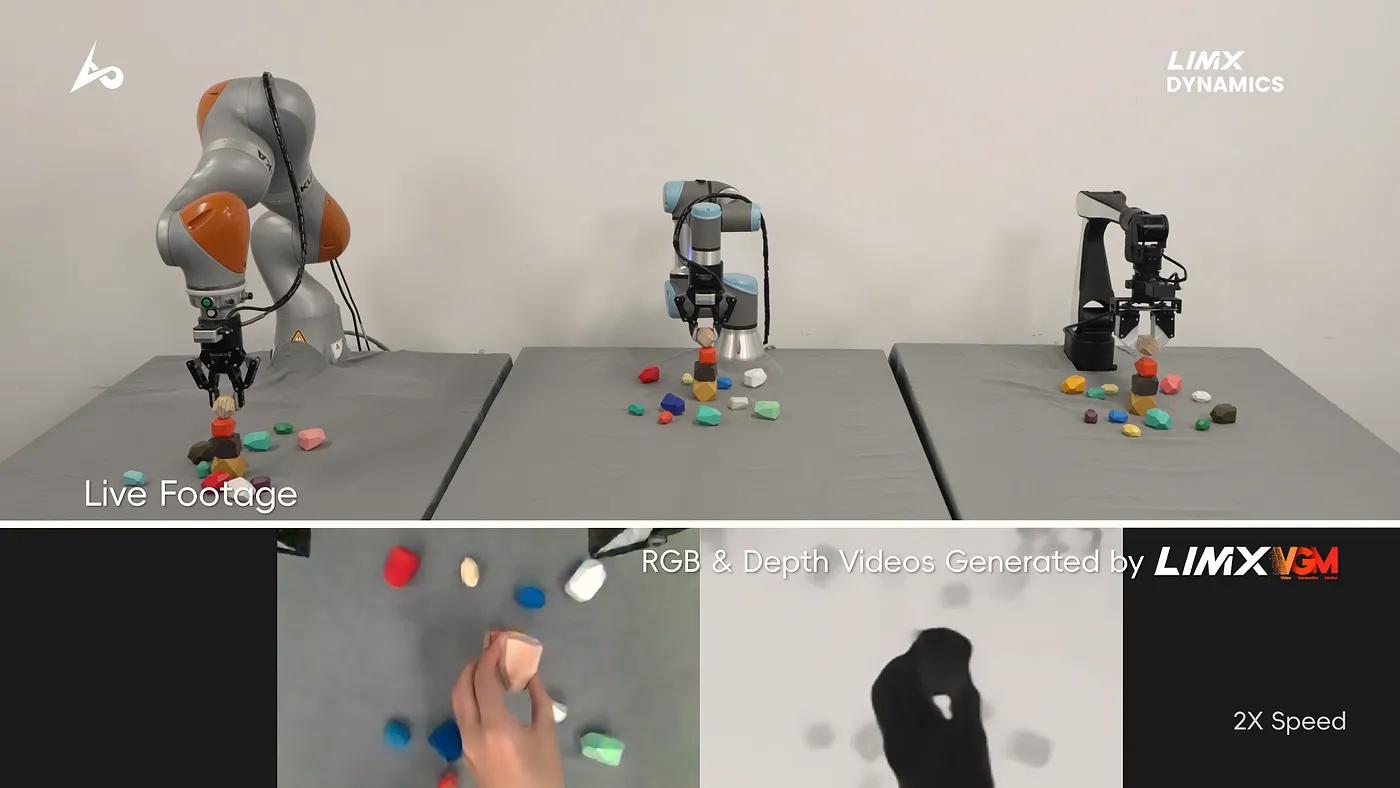
LimX VGM Achieves Highly Similar Manipulation Performances Across Various Platforms
Data-Performance ROI
Data remains a significant barrier to the widespread application of embodied intelligence. It’s inefficient and expensive to acquire real robot and simulated data, often limited by fixed scenarios, limited object categories, real2sim2real gap, hardware coupling and so on. LimX Dynamics addresses these hurdles by introducing the concept of “Data-to-Performance ROI”, a metric that evaluates the conversion rate from data cost to manipulation performance.
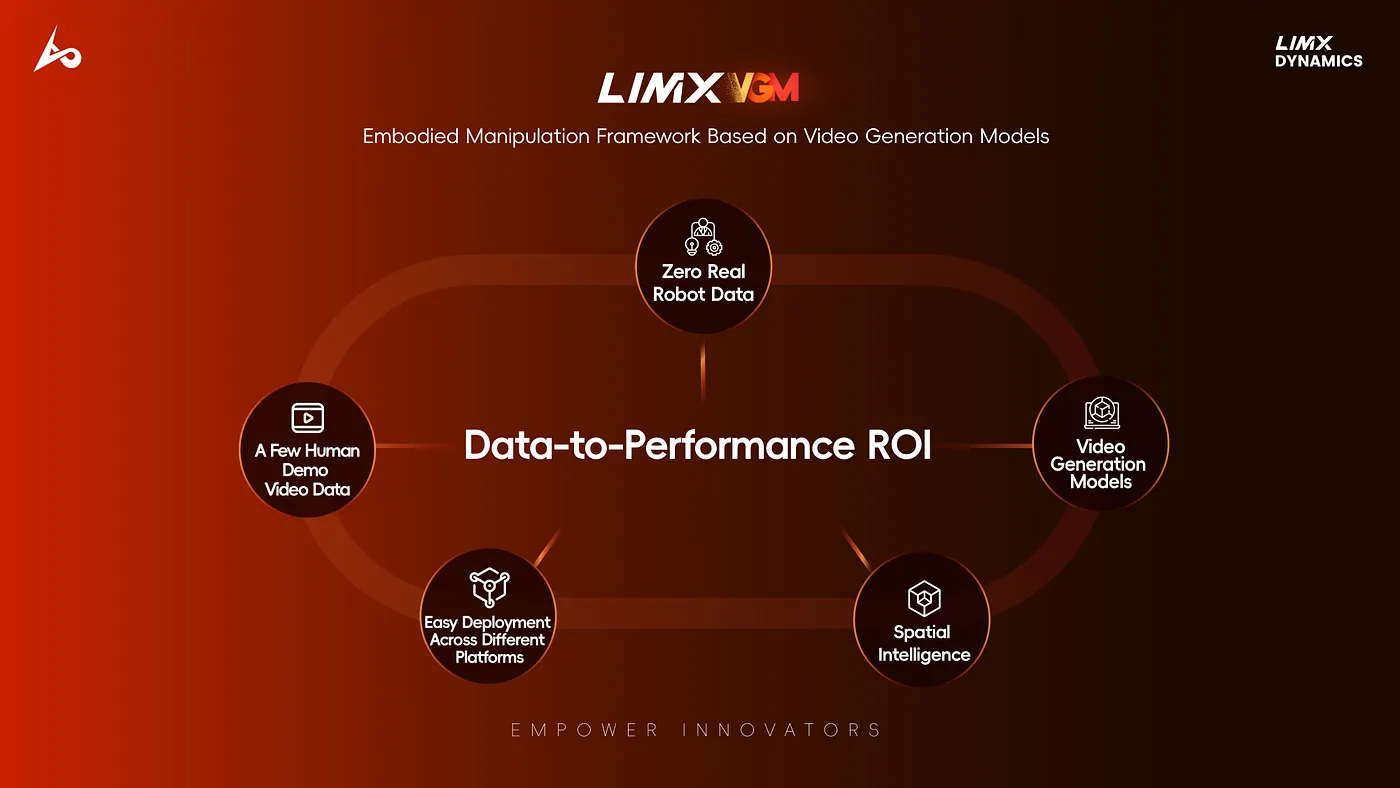
Data-to-Performance ROI
As a result, rather than simply pursuing large-scale or high-quality data, LimX VGM leverages video generation models to enable robots to acquire first-class task planning and execution intelligence at a fraction of the cost compared with other approaches; it maps human manipulation behaviors in 3D space into robot-executable actions, extending the algorithm’s capability from using only robot manipulation data to human manipulation data.
A New Chapter in Embodied Manipulation
LimX VGM represents a critical shift and new approach in achieving embodied manipulation. Moving forward, LimX VGM will adapt to more advanced video generation models like Cosmos, improve inference efficiency, achieve real-time video generation with depth information, and enhance the spatial intelligence module to further improve manipulation precision.
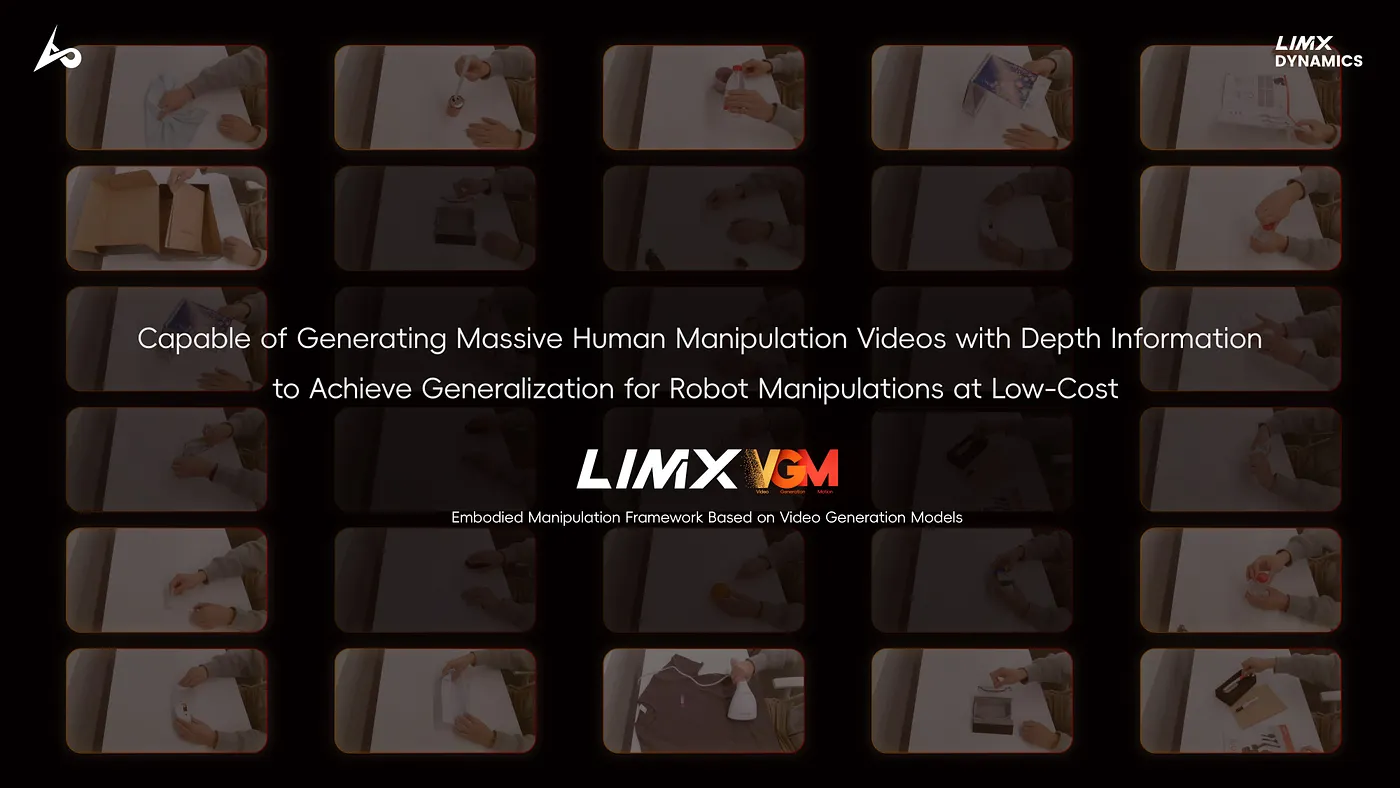
LimX VGM Achieves Generalization for Robot Manipulations at Low-Cost
LimX Dynamics is building partnerships with video generation model companies, system integrators, and innovators worldwide to jointly promote the practical application and deployment of LimX VGM across industries.